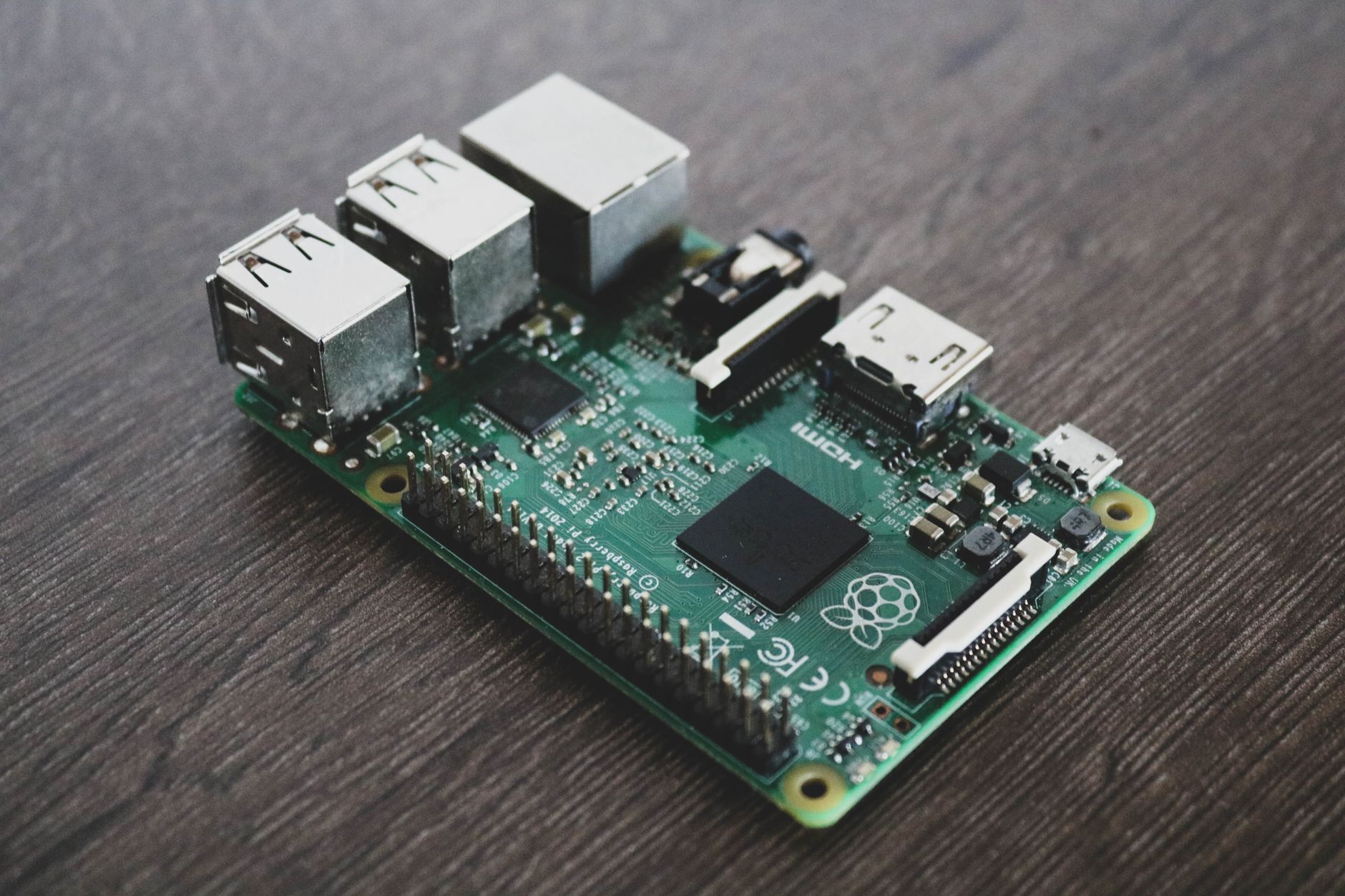
Nabu Casa Home Assistant Green and the Raspberry Pi 5 are the two most discussed hardware choices for running Home Assistant in 2026. Both can run Home Assistant OS, but they target different users with different priorities.
Home Assistant Green
The Home Assistant Green is purpose-built by Nabu Casa specifically to run Home Assistant OS. It is the official appliance approach to running Home Assistant.
Hardware Specs
- Rockchip RK3566 processor (quad-core ARM Cortex-A55)
- 4GB RAM (LPDDR4)
- 32GB eMMC internal storage
- 1x Gigabit Ethernet
- Price: ~$99
What is Great About It
Zero setup: Plug it in and it boots directly into Home Assistant OS in under 2 minutes. No flashing, no configuration — just plug in an Ethernet cable and go to homeassistant.local:8123.
Officially supported: Nabu Casa develops and tests Home Assistant OS specifically for this hardware.
Purpose-built design: The Green runs quietly and efficiently 24/7 without active cooling.
Limitations
The RK3566 processor is slower than the Raspberry Pi 5 BCM2712. For most Home Assistant use cases this does not matter — but if you want to run Frigate NVR with AI detection on the same device, the Green will struggle with more than 2–3 cameras. The 32GB eMMC is not expandable internally.
Raspberry Pi 5
Hardware Specs (4GB Model)
- Broadcom BCM2712 (quad-core ARM Cortex-A76 @ 2.4GHz)
- 4GB or 8GB LPDDR4X RAM
- MicroSD + PCIe interface (for NVMe SSD via HAT)
- Price: ~$60 (4GB) + $15 case + $15 power supply + $30 NVMe HAT = ~$120
What is Great About It
Performance: The Cortex-A76 cores in the Pi 5 are roughly 2–3x faster than the Cortex-A55 in the Green. This matters if you run Frigate, use advanced templating, or plan to grow your Home Assistant installation.
NVMe storage: With the official NVMe HAT, the Pi 5 can boot from an NVMe SSD — dramatically faster and more reliable than eMMC or SD card storage.
Flexibility: The Pi 5 can run other software alongside Home Assistant if your needs change.
Limitations
Requires more setup than the Green — flashing an SD card or SSD, initial configuration. Higher power consumption (~5–8W vs ~3–5W for the Green).
The Bottom Line
Choose the Home Assistant Green if: You want the simplest possible setup, you are not planning to run Frigate on the same device, and you value the plug-and-play experience.
Choose the Raspberry Pi 5 if: You want maximum performance for growth, you plan to run Frigate NVR on the same device, or you want NVMe storage for long-term reliability.
For most users who are already comfortable with technology: the Pi 5 with NVMe offers better value and more headroom for a similar price.
Home Assistant Green vs Raspberry Pi 5: Which Should a Beginner Choose?
If you are brand new to Home Assistant, the honest answer for most beginners is the Home Assistant Green — and here is why:
- Home Assistant Green is plug-and-play. It ships with Home Assistant pre-installed. You connect power and ethernet, open the browser, and you are running. There is no operating system to flash, no SD card to image, and no command line to touch.
- Raspberry Pi 5 is more flexible but adds steps. You have to buy storage separately, flash Home Assistant OS yourself, and handle the occasional configuration — perfectly fine for tinkerers, but real friction for a first-timer.
- Less to break. The Green is a sealed appliance with durable built-in eMMC storage, so you avoid the SD-card corruption that catches a lot of new Raspberry Pi users.
Choose the Raspberry Pi 5 if you already enjoy tinkering, want to run other projects on the same board, or need the extra horsepower (see the performance section below). Choose the Home Assistant Green if you simply want Home Assistant to work with the least possible setup. For more on getting started, see our Home Assistant guides.
Performance Compared: Home Assistant Green vs Raspberry Pi 5
On raw specs the Raspberry Pi 5 is the more powerful board, but for Home Assistant specifically the gap matters less than you might expect:
- Processing power. The Pi 5’s quad-core Cortex-A76 is noticeably faster than the Green’s CPU. For a typical smart home — dozens of devices, automations and a few dashboards — both feel instant. The Pi 5’s extra headroom only shows up under heavy workloads.
- Add-ons and integrations. If you plan to run demanding add-ons alongside Home Assistant (Frigate NVR with object detection, a database, Node-RED, local voice processing), the Pi 5’s extra power and NVMe storage option pull clearly ahead.
- Storage and reliability. The Green uses fast, durable built-in eMMC. A Pi 5 is fastest on an NVMe SSD; on a microSD card it is slower and more prone to failure over time.
- Power draw. The Green is designed to sip power running 24/7. A Pi 5 under load draws more — a small but real difference on an always-on device.
Bottom line: for a standard local smart home, both handle Home Assistant comfortably. Pick the Pi 5 only if you know you will push it with heavy add-ons; otherwise the Green delivers the same smooth experience with far less setup and maintenance.
Side by side
| HA Green | Raspberry Pi 5 | Mini PC (N100) | |
|---|---|---|---|
| CPU | RK3566 (A55) | BCM2712 (A76), 2–3× faster | Intel N100 (x86), fastest |
| RAM | 4GB | 4 or 8GB | 8–16GB |
| Storage | 32GB eMMC (fixed) | microSD or NVMe (HAT) | NVMe SSD included |
| Real cost | ~$99 all-in | ~$120 with case/PSU/NVMe | ~$150–180 |
| Setup | Plug & play (2 min) | Flash + configure | Install HAOS/Proxmox |
| Power (24/7) | ~4W | ~6.5W (9W+ loaded) | ~10–15W |
| Best for | Simplicity, no Frigate | Growth, light Frigate | Heavy Frigate, many add-ons |
The running cost nobody mentions — and why it shouldn’t decide it
A lot of people reach for the Green assuming it will save meaningful money on electricity. Here are the actual numbers for a device running 24/7, all year:
- HA Green (~4W): about 35 kWh/year — roughly $6/year in the US, $10–11/year in Europe/UK.
- Raspberry Pi 5 (~6.5W normal): about 57 kWh/year — roughly $10/year US, $16–17/year Europe/UK.
- Mini PC N100 (~12W): about 105 kWh/year — roughly $18/year US, $29–32/year Europe/UK.
The honest takeaway: the difference between the Green and the Pi 5 is around $4–7 per year. That’s a rounding error — less than a single month of the camera subscription this whole setup is meant to replace. Don’t choose your hardware to save electricity; the gap is trivial. Choose it on setup effort and how much you plan to grow. (All three are cheap to run: even the mini PC costs less than $3/month at the wall.)
How many Frigate cameras can each handle?
This is the question that actually separates them, because running Frigate NVR on the same box is where the CPU matters. Rough real-world guidance (it varies with resolution, frame rate, and whether you add a Google Coral):
- HA Green: not the tool for this. It can technically do 1–2 low-resolution detection streams, but you’ll fight it. If Frigate matters to you, look elsewhere.
- Raspberry Pi 5: comfortable with 2–4 cameras, and more if you add a Coral USB accelerator to offload detection. A solid middle ground.
- Mini PC (N100): handles 6–10+ cameras using its integrated GPU for detection (OpenVINO). If you’re building a real multi-camera local NVR, this is the one — details in our mini PC setup guide.
So the decision, in one line: Green if you want Home Assistant and nothing else to think about; Pi 5 if you want room to grow with light camera work; a mini PC if Frigate with several cameras is the whole point. All three run your home fully locally — that part never depends on the hardware tier.
Free guide — no signup
Trying to cut the cloud out of your smart home? This is the whole map in one place.